Meteora in 2 Days: Monasteries, Kastraki and Getting There
Spend two days and at least one night in Meteora rather than treating the monasteries as a quick stop from Athens. Choose two or three monasteries according to their actual opening days and the stairs you can manage. Stay in Kalambaka for town services or Kastraki for a village base beneath the rocks, then arrange transport between the visits you have chosen.
Meteora at a glance
| Choice | Best fit | Check first |
|---|---|---|
| Kalambaka | Meals and a practical arrival base | The final walk or ride from your arrival stop to the hotel |
| Kastraki | A smaller village setting close to the rocks | The onward ride to each monastery and return after dinner |
| One night | An afternoon arrival and a full visiting day | Opening days and the time of your onward departure |
| Two nights | A slower pace and more room for weather or closed interiors | Which visits you want to spread over two days |
A late-October 2026 Kathimerini report quoting Meteora’s mayor describes approximately 2.5 million annual visitors, citing a 2025 Culture Ministry study. This is an attributed estimate, not a monastery ticket count. Its practical lesson is to spread visits across the day and spend time in the surrounding towns rather than treating the site as a series of bus-stop photographs.
Best time for monastery visits and walks
Compare spring and autumn if your main goal is walking between viewpoints and visiting interiors. Summer can be hot on exposed steps and roads, so start earlier, carry water and keep a shaded break in the middle of the day. Winter can suit a quieter, shorter itinerary, but check daylight, road conditions and individual opening arrangements.
No season guarantees a clear view across the rocks. If fog or rain arrives, shorten outdoor stretches and keep the day anchored to a monastery you can safely reach. Do not leave a difficult descent until dark just because sunset photographs were part of the plan. Take shoes with grip and a layer for changes in weather.
Day 1: Arrive, settle in and choose one visit
Pick a realistic first afternoon
Check in or leave your luggage, then visit one monastery if the arrival time and current calendar allow it. The Greek tourism organisation’s route guide is a useful introduction to the different monasteries. Choose by interest and access rather than assuming all six should fit into a first afternoon.
These are active religious communities. Read the dress instructions before leaving your hotel, carry appropriate clothing and follow photography signs inside. Ask about the approach and stairs if anyone in your group has limited mobility. A vehicle can reach a parking area without making the entire visit step-free.
Keep the evening near your base
Have dinner in Kalambaka or Kastraki and check tomorrow’s pickup or driving route. If you go to a viewpoint, use designated places, keep away from exposed edges and plan how you will return. There is no need to climb onto an unprotected rock to appreciate the landscape. Stay clear of road bends and do not stop a vehicle where it obstructs traffic.
Day 2: Two monasteries, with time between them
Use the current opening schedule to choose the order. For example, compare Great Meteoron and Varlaam for their heritage collections and setting, then decide whether another visit would add something genuinely different. Give each interior time rather than rushing through because the next ticket is waiting. The UNESCO profile explains why the landscape and the monastic buildings belong together.
Check admission, accepted payment and last-entry arrangements directly before setting out. Do not use one monastery’s schedule as a rule for all the others. If a planned stop is closed, switch to another confirmed visit or a shorter local walk. Keep the final afternoon free enough to meet your onward connection without turning a mountain road journey into a race.
Getting there: verify the actual service
Do not assume an old direct-train description still applies. The Hellenic Train network page currently lists bus-substituted sections, including the connection toward Kalambaka. Check the operator’s journey planner for the full route on your date, the interchange point and the actual arrival stop. For an intercity coach, check the responsible operator rather than buying solely from an intermediary summary.
For local travel, compare a prearranged driver or small-group outing with self-driving. Ask exactly which monasteries are included, how much visiting time you get and whether tickets are separate. Independent walkers should choose a signed route that fits daylight and fitness; a short distance on a map can include steep terrain or unsafe road walking.
Before you book
- Choose one or two nights, then check two priority monasteries against the calendar.
- Confirm the arrival and return journeys before reserving a timed local outing.
- Read current Greece travel advice and keep weather-sensitive walks flexible.
Your next step: Compare Kalambaka and Kastraki hotel access, then save your onward journey. Use our Athens itinerary, Greek island planning guide and Europe travel hub to avoid adding too many regions to one week.
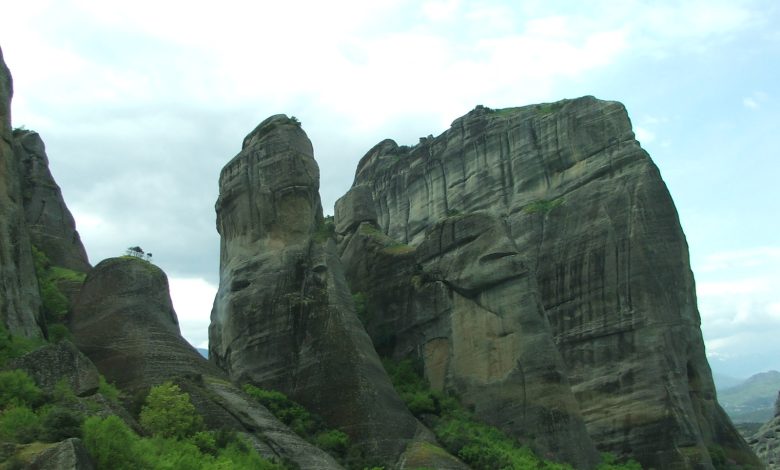
Featured photo: Mzmona / Wikimedia Commons, CC BY-SA 3.0.