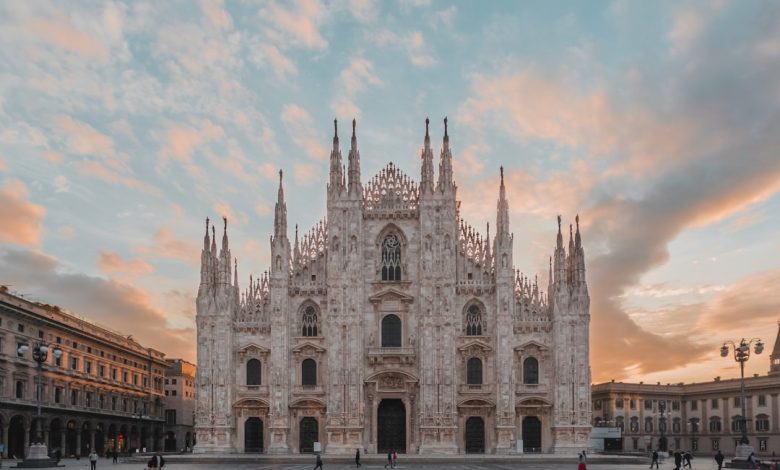
Milan is easier to enjoy when you choose your main art visits before filling the rest of the itinerary. Three full days allow time for the Duomo, Brera, neighbourhood food and another major collection or performance. If seeing Leonardo’s Last Supper is essential, organise that reservation first and build the surrounding day around the confirmed entry.
Milan at a glance
| Decision | Practical starting point |
|---|---|
| Recommended stay | Three full days for a first visit |
| Where to stay | Duomo or Brera for central walking; Centrale for rail connections; Navigli for evenings |
| Getting around | Metro, trams and walking; airport journeys planned separately |
| First booking | The Last Supper if it is a must-see, then the Duomo visit you want |
When to go and what changes the budget
Spring and autumn are useful starting points for a walking-focused stay, but major design and fashion events can change accommodation availability. Compare room totals for your exact dates before committing to transport. Summer needs heat breaks and a check of individual business closures; winter works well for galleries and performances if you allow for shorter daylight.
Do not assume that every shop closes in August or that a fashionable week automatically offers public access to industry events. Use the city’s official visitor information for current programmes, and verify any event with its organiser. Choose dates that fit your interests rather than a generic “best month” claim.
A realistic three-day Milan itinerary
Day 1: Duomo and the central streets
Start with the Duomo’s official visit information. Cathedral, terrace, museum and archaeological-area access depend on the ticket chosen. Compare the stair and lift options and check accessibility carefully: buying a lift ticket is not a guarantee that the entire route has no steps.
Allow for security screening and follow the cathedral’s current dress and bag rules. Afterwards, walk through Galleria Vittorio Emanuele II and towards the La Scala area. Book a performance only if it interests you and fits your schedule; a theatre museum or tour is a different experience with different access arrangements.
Day 2: Brera, Sforza Castle and a quieter afternoon
Make the Brera art collection your main morning visit, then leave time for the surrounding streets and independent shops. Check the collection’s own booking conditions before making a fixed lunch reservation. Continue towards Sforza Castle and Parco Sempione if your energy and the weather suit a longer walk.
The castle grounds and individual museum admissions are separate planning decisions. Avoid squeezing several large collections into a single afternoon. If design or contemporary architecture matters more to you, substitute Porta Nuova for part of the museum programme.
Day 3: Last Supper and Navigli
Visit the Museo del Cenacolo Vinciano at your reserved time. As checked on 23 October 2026, advance reservation is required for everyone, including free admissions, and the museum asks visitors to arrive 30 minutes before their viewing. Read the current identification, named-ticket and luggage conditions before travelling.
If tickets are unavailable, choose another collection instead of building the day around a hoped-for walk-in. Later, explore the Navigli canals and Vicolo dei Lavandai, then choose dinner nearby. Check any market’s actual date: an old description of an evening market is not a reliable operating calendar.
Food, shopping and where to stay
Look for dishes such as saffron risotto, ossobuco and seasonal specialities on menus, and ask what is included in an aperitivo offer. Dietary needs deserve specific questions about ingredients rather than assumptions. Reserve a particular restaurant if it is central to your plans, while leaving ordinary meals flexible.
The Quadrilatero della Moda suits fashion browsing; Brera and Navigli offer different shopping atmospheres. You do not need a luxury purchase to enjoy the streets. For accommodation, compare exact station access, luggage handling and evening noise. Centrale can simplify rail journeys, while a central walking base may reduce daily transfers. Navigli suits lively evenings but varies considerably by street.
City transport and airport transfers
Use ATM’s contactless guidance or its ticket information to choose a payment method. Follow the required validation procedure and use the same payment device consistently. Compare a pass with the rides you will actually make; a sightseeing card is not automatically the cheapest choice.
Identify your airport before booking a transfer. Malpensa, Linate and Bergamo are different arrival points. The Malpensa Express has its own ticket conditions; its airport ticket is not a general pass for travelling around Milan. Check your terminal, city station and final hotel connection, particularly with an early flight or late arrival.
Common mistakes to avoid
- Booking non-refundable plans before securing an essential timed art visit.
- Assuming every attraction or terrace is included in a cathedral ticket.
- Using a generic city pass description for an airport journey.
- Planning a lake excursion as a short gap between city reservations.
- Relying on old opening claims for privately managed attractions or seasonal events.
Continue planning
Choosing another Italian art city? Compare our Florence guide or three-day Perugia itinerary before adding extra stops. Browse the Europe destination hub to build a route that fits your available nights.