Troyes in 2 Days: Timber Houses, Stained Glass and a Car-Free Stay
Troyes is a useful choice when you want a French city break organised around walking and one absorbing subject. Here that subject is stained glass, supported by streets of timber-framed houses and enough places to pause over lunch. Two days let you enjoy the centre without turning the visit into a dash between an outlet-shopping trip, vineyards and several distant towns. Start with the city; add the countryside only if you have more time.
Choose dates around the museum calendar
Spring and autumn are reasonable starting points for a walking itinerary, provided you pack for rain. Summer offers longer evenings but can mean heat during daytime walks. Winter can still work for an indoor cultural break, although shorter daylight and museum closures matter more than the appeal of a quieter street.
The important near-term detail is the Cité du Vitrail’s current visitor notice. As checked on 31 October 2026, it lists closures on 1 and 11 November and a chapel closure from 3–8 November 2026. Check your chosen date before reserving travel, particularly around holidays. A museum being generally open in winter does not guarantee access to every space.
How long to allow and how to arrive
Two nights suit visitors who want unhurried meals and a full middle day. One night is sufficient when the outward and return journeys leave two useful blocks of daylight. A day trip is possible, but it makes the return connection part of every decision and reduces your freedom to linger.
Check the actual Paris–Troyes journey with SNCF Connect and the regional operator. Look beyond the headline fastest journey: your selected departure may involve a connection or replacement coach. Check the Paris station, Troyes arrival point, seat-reservation requirements and disruption notices. If combining this with the capital, use our Paris guide to protect enough time for the transfer between stations or an airport.
Day one: learn the shape of the centre
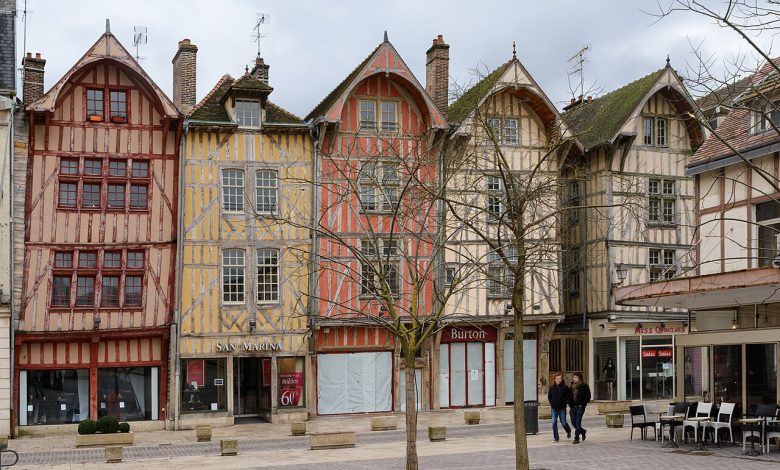
Leave luggage at the hotel, collect an official walking map and make the old centre your first appointment. Follow streets that interest you instead of hunting for every named façade. The tourism office’s architecture introduction gives context for the timber-framed buildings and their restoration. Many are homes or working businesses, so keep entrances clear and respect private courtyards.
Build the walk around a proper lunch break. Afterwards, choose one church or a small exhibition according to opening arrangements and your interests. Religious buildings can change access for services or events; stay flexible and avoid treating them as uninterrupted photography studios.
Keep dinner central and reserve if the restaurant matters to the trip. Ask about the menu, dietary requirements and kitchen times. A restaurant’s general opening time is not necessarily the time it takes its last food order.
Day two: stained glass with time to look
Make the Cité du Vitrail the main visit rather than an optional stop after everything else. Its permanent exhibition presents stained glass from different periods and contexts. The official tourism listing is a useful starting point, while the museum’s own practical page should settle current access and ticket questions.
Allow time afterwards to look at a church window with what you have learned in mind. This gives the day a connection, rather than simply another admission ticket. Keep the remaining afternoon for a café, independent shops or a second museum only if you still have the energy.
If food and a larger city are your priority instead, compare our Lyon guide. Troyes works especially well when the compact centre and a focused cultural visit are the reasons you are travelling.
Choose a hotel that supports walking
Look for accommodation in or immediately beside the historic centre, then check the route from the station with luggage. An attractive period building may have stairs, uneven floors or limited vehicle access. Confirm lift access, room location and late check-in rather than relying on a photograph of the façade.
A car adds little to these two central days. If arriving with one as part of a longer journey, arrange parking and baggage drop-off before entering restricted streets. Choose a countryside excursion only after checking its transport and return arrangements; do not assume a Champagne-region address is within walking distance of Troyes.
Booking priorities and common mistakes
First confirm the museum date, then the real transport connection and hotel. Price any pass against the attractions you intend to enter, not every attraction on its brochure. Keep a wet-weather alternative and read current France travel guidance before departure.
Use our Europe planning hub to compare other walkable cultural breaks. Avoid stacking museums on closure days, mistaking a replacement coach for a direct train, or spending the entire visit away from the centre.
Next step: choose the day you will visit the Cité du Vitrail, check its dated notices, then book transport and a central room around that anchor.
Photo: Myrabella / Wikimedia Commons, Rue Émile-Zola, Troyes, February 2015, CC BY-SA 4.0. Resized display copy.