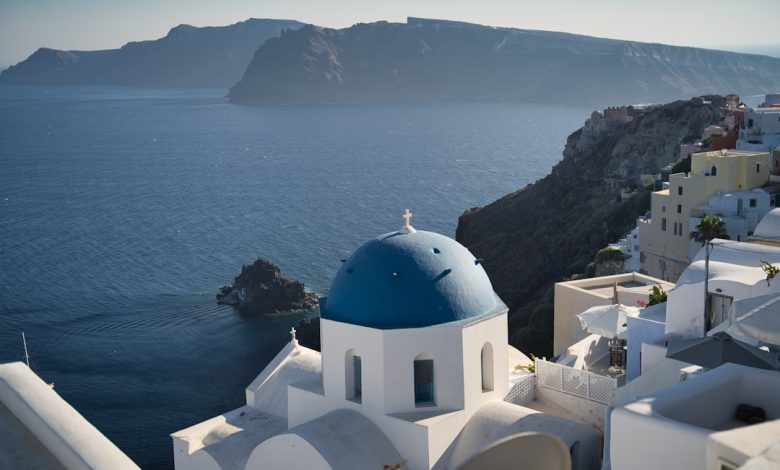
The hardest part of a Greek island holiday is often deciding what to leave out. Santorini, Corfu and Rhodes belong to different island groups; combining famous names without checking the connections can consume a short holiday in transit. Choose the region first, then the islands and accommodation. A well-planned week on one or two islands is usually more useful than an ambitious list of ferry tickets.
Choose the island group for your interests
The Greek National Tourism Organisation’s island directory separates the Cyclades, Dodecanese, Ionian, North Aegean, Argosaronic, Sporades, Evia and Crete. These are starting points for research, not a promise of direct transport between every island in a group.
| Region | Places to compare | Useful decision |
|---|---|---|
| Cyclades | Santorini, Mykonos, Naxos, Paros, Tinos, Syros | Choose scenery, beaches, village walks or nightlife before choosing a port |
| Dodecanese | Rhodes, Kos, Patmos, Leros, Kasos | Match historic sights and smaller-island time to actual sailings |
| Ionian | Corfu, Kefalonia, Zakynthos, Lefkada | Consider one island with a suitable airport rather than assuming an easy ferry chain |
| North Aegean | Lesvos, Chios, Samos, Ikaria | Allow time for local culture and the journey between places |
| Argosaronic | Aegina, Hydra, Poros, Spetses | Compare an Athens add-on with an overnight island stay |
| Crete | Heraklion, Chania and a chosen regional circuit | Treat a large island as a holiday in its own right |
Use our Rhodes guide when medieval streets and coastal time are your priority. The Athens guide helps plan the mainland portion of a trip. Neither replaces checking your particular ferry dates.
What the regions offer
Within the Cyclades, consider Naxos for a mix of villages and coast, Tinos for religious heritage, and Syros for urban architecture. Santorini and Mykonos can be rewarding, but the famous viewpoint or nightlife district need not determine every day of your trip. Leave time for ordinary meals, walking and your own interests.
Rhodes offers a substantial historic city as well as coastal stays; Kos combines archaeological visits and town life. Patmos has important religious sites. For the Ionian islands, compare Corfu’s old town with the landscapes and beaches of Kefalonia or Zakynthos. Do not assume access to a photographed beach or viewpoint is permitted: follow current closures and local signs.
Chios offers mastic-related culture, Samos archaeological interests, and Lesvos towns and landscapes that deserve more than a rushed stop. Crete needs its own regional choice: crossing repeatedly between opposite ends leaves less time for museums, villages and the coast.
How many days: choose one of these outlines
- Four nights: one island, one accommodation base and one main interest each day.
- Seven nights: one larger island, or two islands with a verified connection; allow the moving day to remain mostly free.
- Ten nights: a measured two-island route plus Athens can work, provided the actual arrival and departure arrangements fit.
For a seven-night two-island trip, spend the first three nights on the first island, move on day four, then allow three nights on the second. Position the final night for the departure airport when disruption would otherwise put the flight at risk. This is a planning buffer, not a guarantee against cancellations.
Ferry planning: check ports before paying
Search the exact travel date, departure port and arrival port with the operator. Athens-area ports are not interchangeable, and an island can have more than one arrival point. Compare baggage rules, seat category, check-in instructions and the onward transfer to the hotel.
Use an operator such as Blue Star Ferries to check the current timetable and service notices. Ferries may be affected by weather or strikes; a summer timetable copied from an old guide is not a booking plan. Avoid relying on a final-day ferry to connect with an expensive international flight.
If bringing a rental car, get written permission for ferry travel and confirm insurance and breakdown support on each island. For a short island stay, separate local hire or buses may be simpler than carrying one vehicle through the whole trip.
Best time and where to stay
May–June and September–early October are dates to compare for walking and sightseeing, rather than promises of empty beaches or cheap rooms. July and August require particular attention to heat, demand and availability. Outside the main visitor season, check which boats, restaurants and excursions actually operate.
Stay near a town when evenings on foot and bus access matter. Choose a beach property when swimming facilities are the priority. For hillside villages and clifftop accommodation, ask about steps, luggage access, shade and the route home after dinner. A beautiful room can be inconvenient for the trip you intend to take.
Booking priorities and common mistakes
Align the international journey, island connections and accommodation before reserving non-refundable excursions. Keep a weather alternative for boat days. Follow swimming flags, protected-area rules and current Greece travel advice, including local instructions during heat or wildfire alerts.
Ask the accommodation whether local tap water is suitable for drinking and where to refill; do not make one drinking-water assumption for every island. Respect worshippers at religious sites, seek permission for photographs and keep to designated paths.
Continue planning: test the route before booking the rooms
Write down your two most important experiences, select one island group and check each connection on its actual date. Then compare the Europe planning hub for other regional options. If the ferries do not fit, simplify the route before paying for accommodation.



2 Comments