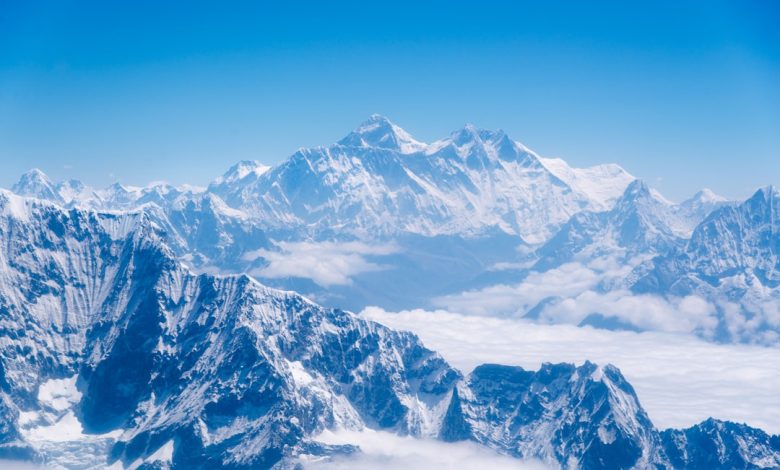
Mount Everest, with its towering peaks that reach the skies, has long captivated the human spirit. As the highest point on Earth, it represents the ultimate challenge for climbers and an object of fascination for the rest of us. This blog post will explore the many facets of this majestic mountain, from its staggering height and unique location to detailed maps that chart its vastness. We will delve into intriguing Mount Everest facts, celebrate the climbers who have dared to face its slopes, and examine the cultural and environmental significance that makes Everest more than just a mountain. Providing a comprehensive guide on Mount Everest, height, location, map, facts, and climbers’ tales, we invite you to journey with us into the heart of this icon of nature’s grandeur.
The Towering Titan: Unveiling Mount Everest’s Height
When talking about the magnificence of the natural world, it’s impossible not to mention the awe-inspiring Mount Everest. Known as the pinnacle of Earth’s surface, Mount Everest’s height reaches an astonishing peak, making it the ultimate challenge for mountaineers and an emblem of natural wonder. The stature of Mount Everest is not just a number; it symbolizes the limits of human ambition and the raw beauty of our planet.
Mount Everest | Height, Location, Map, Facts, Climbers – this phrase captures the essence of what makes this mountain so captivating. Standing at an official height of approximately 8,848.86 meters (29,032 ft) above sea level, as reported in recent surveys, Mount Everest holds the title of the world’s highest mountain. This grandeur not only attracts adventurers from all corners of the globe eager to conquer its summit but also sparks interest among those fascinated by its natural majesty.
Let’s put Mount Everest’s height into perspective:
- Mount Everest: 8,848.86 meters
- The second highest peak, K2: 8,611 meters
- Mount Kilimanjaro, the tallest in Africa: 5,895 meters
This comparison table serves to highlight just how unparalleled Mount Everest is in terms of elevation. What truly makes Mount Everest Trip Advisor an intriguing focus is not only its sheer scale but the intricate interplay of geological and climatic forces that have shaped it over millennia.
The height of Mount Everest is a testament to the dynamic and ever-changing nature of the Earth. It was formed and continues to be molded by the collision of the Indian and Eurasian tectonic plates, a process that also steadily adds to its height over time. Thus, Mount Everest is not just a static symbol of grandeur; it is an evolving giant, encapsulating the vibrant force of nature.
In understanding Mount Everest’s impressive stature, one also gains a deeper appreciation for the climbers who have braved its harsh conditions. The height of Mount Everest represents not just a physical challenge, but a mental and spiritual journey, pushing the boundaries of human endurance and courage.

Nestled in the Clouds: The Geographic Marvel of Mount Everest’s Location
Mount Everest, a name synonymous with towering aspiration and earthly wonder, stands as a geographic marvel, nestled between the serene clouds of the Himalayas. Its location is not just a point on a map but a confluence of natural history, geography, and the dreams of climbers who have dared to approach its summit. Understanding the location of Mount Everest is essential to grasping the full magnitude of what it represents in the realm of mountaineering and beyond.
Mount Everest: A Geographic Overview
- Continent: Asia
- Countries: Nepal and China (Tibet Autonomous Region)
- Range: Himalayas
- Coordinates: 27.9881° N, 86.9250° E
Straddling the border between Nepal and Tibet, Everest is part of the Mahalangur Himal subrange of the Himalayas. This majestic location is more than just coordinates on a GPS; it’s an intersection of diverse ecosystems, climate zones, and centuries-old cultures.
The location of Mount Everest also plays a crucial role in its climatic conditions. The mountain creates its own weather, making climbing unpredictable and often perilous. The north side (Tibet) is known to be windier and colder, whereas the south side (Nepal) is more accessible but not devoid of risks, including the notorious Khumbu Icefall.
Venturing to Mount Everest involves traversing through the Sagarmatha National Park in Nepal or the Qomolangma National Nature Preserve in Tibet, both of which offer stunning biodiversity and cultural experiences. The journey to Everest’s base camps in itself is an adventure through remote villages, ancient monasteries, and breathtaking landscapes.
Behind the maps and statistics lies the essence of Mount Everest’s location — a beacon calling to climbers, explorers, and dreamers across the globe. Its geographical marvel isn’t just about its high altitude or its position on the globe; it’s also about the symbiotic relationship between human perseverance and the raw, untamed beauty of the natural world.
The tales of climbers who’ve faced Everest’s challenges head-on are a testament to the mountain’s allure, compelling adventurers to venture into its grandeur.
Navigating the Giant: A Detailed Exploration of Mount Everest Maps
When preparing to tackle the colossal Mount Everest | Height, Location, Map, Facts, Climbers are four critical pillars of information essential for every expedition. Among these, maps of Mount Everest hold paramount importance in guiding climbers through this perilous journey. Over the years, adventurers, geographers, and scientists have developed various detailed maps to navigate the challenging landscape of Mount Everest. These maps are integral in planning routes, understanding topography, and ensuring safety.
Demystifying Mount Everest through Maps
Maps of Mount Everest vary widely, from topographic maps highlighting elevation changes and terrain features to route maps illustrating the paths taken by climbers. Here’s a glance at the different types of maps used:
- Topographic Maps: These provide a detailed look at the mountain’s physical features, including its towering height and intricate crevasses. They are indispensable for route planning and navigation.
- Route Maps: Focused on the climbers’ paths, these maps outline the various routes to the summit, such as the South Col Route and the North-East Ridge, detailing significant landmarks and potential hazards.
The Crucial Role of Everest Maps in Climbing
Mount Everest maps serve as essential tools for climbers for several reasons:
- Safety: They help identify safer routes, highlighting areas prone to avalanches or crevasse falls.
- Preparation: By studying the maps, climbers can better prepare for the physical challenges ahead, understanding elevation gains and distances.
- Emergency Planning: Maps are crucial for emergency rescue operations, allowing teams to pinpoint the climber’s location quickly.
Enhancing Navigation with Modern Technology
Technological advancements have improved the accuracy and accessibility of Mount Everest maps. Satellite imagery and Geographic Information Systems (GIS) have contributed to producing more detailed and interactive maps. These modern maps provide climbers with up-to-date information, aiding significantly in planning and execution phases of the climb.
In conclusion, maps of Mount Everest represent more than just paper or digital pathways. They encapsulate the essence of preparation, safety, and the relentless spirit of climbers aiming to conquer the world’s highest peak. Whether through traditional topographic maps or cutting-edge digital platforms, these navigational tools are indispensable for anyone looking to explore the majesty of Mount Everest. As we delve deeper into the specifics of Mount Everest Trip Advisor, it becomes evident how each element interlinks, forming a comprehensive guide for the daring souls who wish to summit this giant.
Scaling Everest: A Historical Overview
The tale of scaling Mount Everest is not just a narrative of human endurance and ambition; it’s a testament to humanity’s insatiable quest for conquering the unknown. As we delve into the historical overview of climbing Mount Everest, including its height, location, maps, facts, and tales of climbers, we uncover a saga filled with boundless inspiration, heroic triumphs, and, at times, heart-wrenching tragedies.
Mount Everest, standing at a staggering height, has long been the ultimate challenge for climbers worldwide. Its daunting peaks have beckoned adventurers since the early 20th century, setting the stage for feats of extraordinary human spirit. The journey to its summit is not just a physical conquest but a battle against the elements and the limits of human fortitude.
The Pioneering Attempt:
- 1921: The first reconnaissance expedition laid the groundwork for future attempts.
- 1924: George Mallory and Andrew Irvine made a historic bid for the summit, famously encapsulating the mountaineer’s creed with Mallory’s “Because it’s there.” Their fate remains one of Everest’s most enduring mysteries.
The First Successful Summit:
- 1953: Sir Edmund Hillary and Tenzing Norgay achieved what many had deemed impossible. Their successful ascent marked a monumental moment in the annals of human achievement, forever changing our perspective on the potential of human endurance and willpower.
The Emergence of New Routes and Records:
Moving forward, Mount Everest became not just a peak to be surmounted but a canvas for extraordinary human endeavors. Climbers have forged new routes, achieved faster ascents, and even faced the giant without supplemental oxygen, pushing the boundaries of what was once considered possible.
The Role of Sherpas:
It’s pivotal to highlight the invaluable contribution of the Sherpa people, whose expertise and knowledge of the mountain have been instrumental in numerous expeditions. Their courage and resilience have become an indispensable part of Everest’s climbing history.
The Evolution of Climbing Everest:
Over the years, advancements in climbing gear, weather forecasting, and route mapping have significantly transformed the climbing experience. However, despite technological progress, Mount Everest’s height, location, and the inherent challenges it presents ensure that every climb is a profound journey of discovery.
As we reflect on the historical exploration of Mount Everest, from its height and harsh terrains to the map that guides climbers through its treacherous paths, we gain insight not only into the mountain’s facts but into the indomitable human spirit. The tales of climbers who’ve braved its summit continue to inspire and resonate, reminding us of the beauty and peril inherent in the pursuit of our planet’s most formidable peaks.

Mystery and Majesty: Fascinating Facts About Mount Everest
Mount Everest, standing as a symbol of adventure, challenge, and natural beauty, holds numerous mysteries and facts that captivate minds worldwide. Its height, location, and the daring climbers who have scaled its peak are well-documented, but there’s more to this majestic mountain than meets the eye. Here are some fascinating facts about Mount Everest that contribute to its mystique and allure.
- A Living Mountain: Mount Everest is not just a static mass of rock; it is gradually growing taller by about a quarter of an inch (0.6 cm) each year due to tectonic activity. The collision of the Indian and Eurasian plates continues to push Everest skyward, adding to its already record-breaking height.
- Two Names, One Legacy: Known globally as Mount Everest, it also bears two indigenous names – Sagarmatha in Nepali, meaning ‘Forehead of the Sky,’ and Chomolungma in Tibetan, translating to ‘Mother Goddess of the Universe.’ These names reflect the deep cultural and spiritual reverence local communities have for the mountain.
- The Windy Summit: Gusts at the summit can reach more than 200 miles per hour (322 km/h), and temperatures can drop to a bone-chilling -76 degrees Fahrenheit (-60 degrees Celsius). These extreme conditions make the ascent not just a physical but also a survival challenge for climbers.
- Evolving Ecosystems: Mount Everest’s varying altitudes support distinct ecosystems. From deciduous forests at its base to the barren, icy landscape at its peak, the mountain is a study in biodiversity and climate adaptation.
- A Crowded Resting Place: Over 300 climbers have perished on Mount Everest, and due to the mountain’s harsh conditions, many of their bodies remain on the mountain, serving as a somber reminder of the peak’s deadly challenges.
Mount Everest continues to be a source of fascination and inspiration. Its height, location, and the map that chart the paths taken by climbers only tell part of the story. The facts, mysteries, and the legends surrounding Everest add layers to its majesty, making it a beacon for adventurers, scientists, and dreamers around the world.
Braving the Summit: Inspirational Stories of Everest Climbers
Climbing Mount Everest is not for the faint of heart. The journey to its summit is fraught with peril, but it’s also filled with moments of sheer awe and inspiration. The stories of those who’ve dared to conquer this towering giant are a testament to human strength, resilience, and the relentless pursuit of adventure. Here, we delve into some of the most uplifting and motivational accounts of Everest climbers, showcasing how the Mount Everest | Height, Location, Map, Facts, Climbers have shaped their incredible journeys.
- Edmund Hillary and Tenzing Norgay (1953): The first-ever successful summit attempt by Sir Edmund Hillary from New Zealand and Tenzing Norgay, a Sherpa of Nepal, stands as a monumental moment in the annals of adventuring. Their pioneering ascent paved the way for future climbers and remains one of the most celebrated achievements in mountaineering.
- Junko Tabei (1975): Defying societal expectations and physical challenges, Junko Tabei of Japan became the first woman to reach the summit of Mount Everest. Her remarkable feat not only broke ground for female climbers but also highlighted the indomitable spirit required to tackle the world’s highest peak.
- Erik Weihenmayer (2001): Demonstrating that physical limitations are no barrier to achieving extraordinary feats, Erik Weihenmayer became the first blind person to summit Mount Everest. His story is a powerful reminder of the human potential to overcome adversity through courage and determination.
- Arunima Sinha (2013): After a tragic accident left her an amputee, Arunima Sinha from India set her sights on conquering Mount Everest. Her successful ascent is a stirring example of how fierce perseverance and a never-say-die attitude can turn even the most unimaginable dreams into reality.
These climbers, among many others, have not just scaled a mountain; they’ve transcended limits, both personal and physical. Their stories of braving the summit serve as a beacon of inspiration to us all, encouraging us to aim higher, push further, and dream bigger. The saga of Mount Everest | Height, Location, Map, Facts, Climbers will continue to inspire future generations, as they look up to these towering tales of triumph against the odds.
The Thrill and the Danger: Understanding the Perils of Climbing Mount Everest
When discussing Mount Everest, the words “Height, Location, Map, Facts, Climbers” often feature prominently, evoking images of a majestic yet formidable natural wonder. However, the path to its summit is fraught with challenges that only the bravest climbers dare to face. Understanding the perils of climbing Mount Everest is crucial for anyone contemplating this epic adventure.
Extreme Weather Conditions: At the apex of the world, the weather is unpredictable and harsh. Climbers must prepare for sudden snowstorms, intense cold, and wind speeds that can surpass 200 miles per hour. The severe conditions test the limits of human endurance and equipment.
Altitude Sickness: As climbers ascend, the air becomes thinner, and oxygen levels decrease significantly. Altitude sickness can strike with little warning, leading to potentially fatal conditions such as pulmonary or cerebral edema. Proper acclimatization and the use of supplementary oxygen can mitigate these risks, but they cannot eliminate them entirely.
Avalanche and Icefall Hazards: The Khumbu Icefall, a notoriously dangerous section just above Base Camp, is a maze of crevasses and shifting ice blocks. Avalanches are a constant threat on various parts of the mountain, making every step potentially perilous.
Physical and Mental Exhaustion: The journey to the summit of Mount Everest is a grueling test of physical stamina and mental fortitude. Climbers face long days of arduous travel in extreme conditions, often leading to exhaustion. The psychological pressure of knowing the risks adds another layer of difficulty.
Environmental Considerations: With Mount Everest’s height, location, map, facts, climbers all pointing to its extreme elevation, the environmental impact of climbing cannot be ignored. Each year, the mountain sees hundreds of climbers, leading to concerns about litter, human waste, and the preservation of this majestic peak. Conservation efforts are critical to maintaining the beauty and integrity of Everest for future generations.
Conquering Mount Everest represents the ultimate achievement for many climbers, embodying the thrill of scaling the highest peak on Earth. However, it’s essential to remember that this thrill comes with significant dangers. Proper preparation, respect for the mountain, and an understanding of the risks are paramount for those who wish to undertake this monumental challenge.

Preserving the Peak: Conservation Efforts for Mount Everest’s Environment
The conversation surrounding Mount Everest is not just about its height, location, map, facts, or the climbers who have made history; it’s equally about the imperative to preserve this natural marvel. Mount Everest’s environment faces numerous challenges, including climate change, waste management, and the impact of human footprints. Conservation efforts are, therefore, paramount to ensure that the beauty and integrity of Everest remain for generations to come.
Major Conservation Initiatives:
- Eco-Everest Expeditions: These expeditions focus on climbing in an eco-friendly manner. They emphasize carrying back down the mountaineer’s garbage plus some left by others. Initiatives like these underscore the balance between fulfilling personal dreams and the responsibility towards Mother Earth.
- Sagarmatha Pollution Control Committee (SPCC): Tasked with the regulation of waste management in the Everest Region, the SPCC has been instrumental in setting up waste collection points and ensuring that climbers and trekkers dispose of their waste properly.
- Replanting Projects: Efforts to combat deforestation in the area include local and international replanting projects aimed at restoring native plant species, crucial for maintaining the ecological balance.
- Renewable Energy Solutions: Transition to renewable energy sources in the Everest region has been a game-changer. Installation of solar panels and micro-hydropower plants reduces the dependency on wood and fossil fuels, thereby conserving the forest resources and reducing carbon footprints.
The preservation of Mount Everest is not just a local concern but a global imperative. Climate change, in particular, presents a significant threat, with glaciers melting at an unprecedented rate. Thus, while the tales of climbers and the data concerning Mount Everest’s height, location, map, and fascinating facts continue to inspire and awe, the narrative is incomplete without acknowledging and supporting the conservation efforts.
The future of Mount Everest and its surrounding environment teeters at the edge of human actions. As stewards of this planet, the role of climbers, local communities, governments, and international organizations in conservation cannot be understated. Mount Everest serves as a stark reminder of the beauty our world holds and the urgent need to protect it. Through collaborative efforts, the majestic peak can continue to stand tall, not just as a beacon for climbers but as a testament to successful conservation efforts.
A Global Beacon: The Cultural and Symbolic Significance of Mount Everest
Mount Everest, with its towering height, obscure location, and mythical allure, is not merely a geographical landmark but a symbol of human tenacity, ambition, and the unyielding quest for adventure. This iconic mountain transcends physical dimensions to represent something profoundly spiritual and culturally significant to people around the world.
- Symbol of Achievement: Historically, Mount Everest has been a potent symbol of human achievement. The successful ascent by climbers mirrors the triumph of the human spirit over seemingly insurmountable obstacles. This narrative has inspired countless individuals to push beyond their limits, making Mount Everest a metaphor for reaching the pinnacle of personal success.
- Cultural Import: For the local communities, particularly the Sherpas of Nepal, Mount Everest, or “Sagarmatha” as it is known in Nepali, holds deep religious and cultural significance. It is considered a sacred peak, embodying the divine and offering a connection to the celestial. The reverence for this majestic mountain underscores the harmonious relationship between nature and humankind, a principle deeply embedded in local traditions and beliefs.
- Global Emblem: Beyond its immediate environs, Mount Everest has become a global emblem of exploration and discovery. It draws climbers, adventurers, and nature enthusiasts from across the globe, fostering a sense of international camaraderie and mutual respect among those who dare to confront its challenges. This shared experience has turned Mount Everest into a symbol of global unity and collective human endeavor.
- Inspiration to Artists and Thinkers: Mount Everest’s breathtaking beauty and formidable presence have captured the imagination of artists, writers, and philosophers. It has featured prominently in literature, film, and art, serving as a muse for countless creative expressions. Its depiction across various mediums showcases its vast cultural resonance, transcending geographical and linguistic boundaries.
In conclusion, the cultural and symbolic significance of Mount Everest extends far beyond its geographical location or physical attributes. It is a beacon that illuminates the human capacity for wonder, respect for nature, and the unending pursuit of excellence. Whether for the climbers who’ve etched their names in history, for the local communities that hold it sacred, or for the global population inspired by its majesty, Mount Everest remains a timeless emblem of the earth’s marvels.