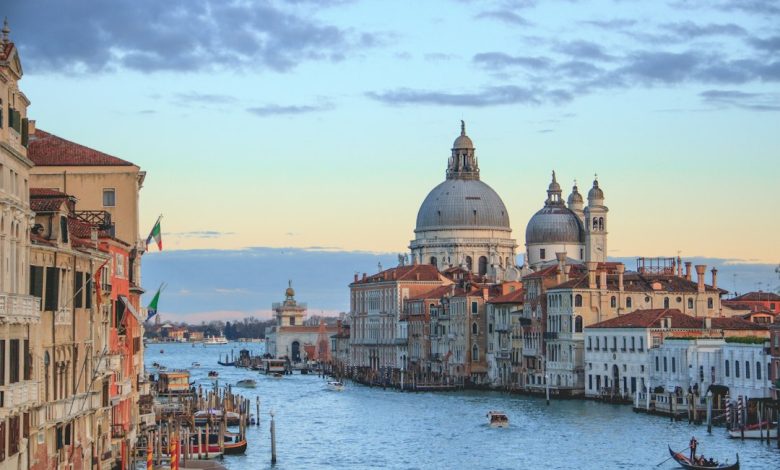
Venice rewards a stay that leaves room between its major sights. Start with two or three nights if you want time for San Marco, Rialto, a quieter neighbourhood walk and an optional lagoon outing. Plan around walking routes, bridges, boat stops and luggage rather than measuring hotel value by distance from one landmark.
At a glance: the decisions that shape your visit
| Question | Planning choice |
|---|---|
| How much time? | Allow three sightseeing days for a balanced first visit with one optional island outing |
| Where to sleep? | Compare historic-city atmosphere with arrival route, bridges and hotel access |
| What to reserve? | Your must-see interior visits and accommodation before filling spare hours |
| What changes? | Access-fee arrangements, tides, boat services, exhibitions and entry rules |
A three-day route without constant backtracking
Day one: San Marco and nearby streets. Give St. Mark’s Basilica the time and ticket choice it needs, then decide whether another major interior visit fits your energy. Leave room for a meal and an unhurried walk. Booking two closely timed visits creates unnecessary pressure when queues, security or walking take longer than expected.
Day two: Rialto and a neighbourhood. Explore the bridge and market area, then choose a walk through Cannaregio or Dorsoduro according to your hotel location and interests. Market sections have different trading patterns; check the current day before planning around fish stalls. Keep an exhibition or church as an optional indoor stop.
Day three: Castello or one lagoon focus. Castello offers squares, churches and quieter stretches beyond the main corridor. Alternatively, choose a glass-focused Murano outing or a longer island trip. Do not assume that Murano, Burano, Torcello and San Michele all fit comfortably into a spare afternoon.
St. Mark’s Basilica: choose the visit you mean
St. Mark’s is a working religious site as well as a major visitor attraction. Check its official website for current visiting and booking information. The basilica, museum, Pala d’Oro and other areas may involve different ticket choices; read the inclusions rather than selecting solely by the product name.
Allow time for security, dress requirements and the walk to the entrance. Religious services, restoration and access conditions may affect the visit. Travellers with mobility needs should check the exact accessible route before booking. An early arrival does not guarantee an empty building.
Gondola costs: use the municipal tariff
A gondola ride is an optional experience, distinct from ordinary transport. On 21 October 2026, the municipality’s published tariff lists €90 for a daytime 30-minute tour and €110 for a nighttime 35-minute tour. Check the current official tariff and applicable time band before agreeing the ride.
Confirm whether the quoted amount covers the boat or a shared product, the meeting point, duration and any separately sold extras. Do not assume a serenade, guide commentary or hotel pickup is included. Route and timing can change with traffic, tides and weather. A traghetto crossing is a different service, not a substitute with the same route or experience.
Access fee: check the actual travel date
The official Venice access-fee portal, checked on 21 October 2026, says the 2026 trial period ended and no payment or exemption request is required from 27 July 2026 for that period. This is not a permanent rule for future trips. The portal also announces a return in 2027; check the applicable dates, conditions and exemptions directly before travel.
Do not confuse an access contribution with an accommodation tax, attraction ticket or transport pass. Keep any required documents available in the form specified by the responsible authority. Avoid paying a third-party website simply because its page appears first in a search.
Where to stay and how to arrive
San Marco puts major sights close, while Cannaregio, Dorsoduro and Castello offer different neighbourhood choices. Compare the exact address with the railway station, airport connection or boat stop you will use. A room that looks nearby on a map may involve several bridges with luggage.
Ask the hotel about lifts, steps, late arrival and the easiest approach. A mainland base can suit some budgets and onward journeys, but adds daily travel to the historic city. Compare the full cost and time rather than treating one area as the best choice for everyone.
Water buses, walking and accessibility
Plan boat journeys through ACTV’s official information, checking the stop, direction, timetable and ticket validity. A timed pass only makes sense when it suits your intended journeys. Airport services and other operators can have separate conditions. Follow validation instructions and keep the ticket available for inspection.
Walking is useful for many routes, but bridges, steps and crowds matter. Check an accessible route rather than assuming a short distance is easy. Use a map and allow pauses; avoid blocking bridge tops or narrow passages. In high-water or severe-weather conditions, follow official local instructions and adjust the day.
Food, crafts and the lagoon
Bacari offer cicchetti and drinks; osterias and trattorias provide a more settled meal. Check menus, table service, dietary needs and any extra charges before ordering. Choose a few places that fit your route instead of crossing the city repeatedly for a food checklist.
On Murano, verify workshop access before promising a glass demonstration. On Burano, ask about the origin of craft items. Treat residential streets, cemeteries and places of worship respectfully. For any island outing, check the return service before leaving and retain flexibility for disrupted boats or changing weather.
Continue planning
Compare the next part of an Italy trip through our Rome guide and Florence guide. Use the Europe planning hub to choose a realistic wider route, allowing proper transfer days between destinations.