Aoraki/Mount Cook in 2 Nights: Walks, Weather and Where to Stay
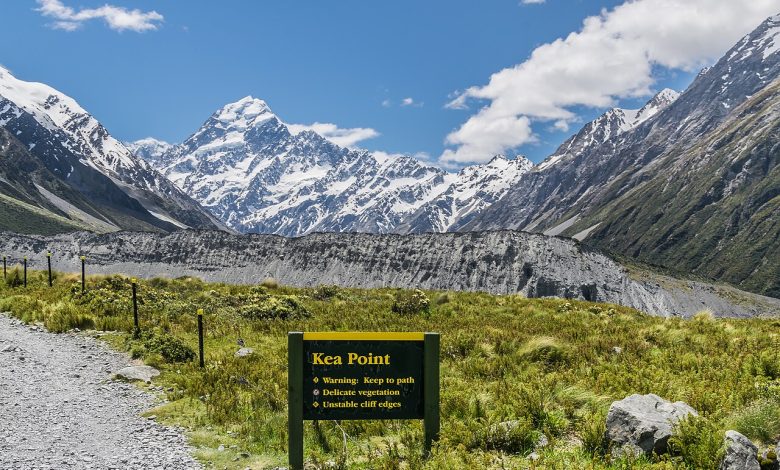
Stay two nights at Aoraki/Mount Cook if mountain walking is a priority on your South Island trip. One night can work for a short visit, but two gives you another chance if cloud, wind or rain changes the day. Pick one main walk and one shorter alternative. You do not need an alpine climb to appreciate the valley and its peaks.
Aoraki/Mount Cook at a glance
| Decision | Useful starting point |
|---|---|
| Stay in the village | Choose it for proximity to walks and a simple return if weather changes. |
| Stay in Twizel | Compare room and meal options, while counting the drive each way. |
| Main walk | Check Hooker Valley’s current alerts and the route actually open. |
| Shorter alternative | Consider Kea Point if its current conditions fit your group. |
In April 2025, the Department of Conservation described Hooker Valley as receiving around half a million visitors annually. That was an approximate use figure, not a forecast for your dates. In September 2026, DOC announced plans for a first-bridge visitor pause gate. High interest makes checking access and allowing time more useful than following an old unbroken route description.
Best time: decide what kind of trip you want
Summer gives you longer daylight for valley walks, but wind, rain and sudden temperature changes still matter. Spring and autumn can suit a flexible road trip if you accept snow or ice affecting individual tracks. Winter is a different proposition: keep to routes that DOC considers suitable for the conditions and your equipment. Do not infer safety from a trail’s summer popularity.
Read the mountain forecast, not just a town weather symbol. A clear morning can become an unpleasant return if wind strengthens. Carry layers, a waterproof shell, sun protection, food and water, even for a short walk. If the mountains stay in cloud, use the visitor centre or a shorter outing rather than pushing farther for a photograph.
Day 1: Arrive without a late-day hiking deadline
Travel in, settle into your accommodation and check the visitor information. The road into the village follows Lake Pukaki, so allow proper stops rather than pulling over wherever the view appears. Use designated safe parking areas. Confirm fuel, food and check-in arrangements before leaving a larger town; do not assume you can buy every item on arrival.
If daylight and conditions allow, choose a short signed walk near your base. Save your main outing for the next suitable morning. Ask where you can get current trail updates, and look at the walk from your actual starting point: beginning in the village can add distance compared with starting at a trailhead.
Day 2: Hooker Valley or a shorter alternative
Check the current Hooker Valley route
The official track page says a new second swing bridge opened in July 2026. Check that page again before walking, including alerts, bridge controls and conditions on the day. Follow staff instructions and posted limits. A reopening notice does not guarantee the route stays open during high wind or heavy rain.
Set a turnaround time and keep enough energy for the return. Take breaks where you can step aside without damaging vegetation, and stay on the track. Do not wander onto unstable river margins, moraines or ice. If your group has different walking speeds, agree how to stay together before leaving the car park.
Use Kea Point as a deliberate choice
The Kea Point guide explains the village and White Horse Hill starting options. Choose the one that fits the day. Sealy Tarns involves a very different effort, and a route toward Mueller Hut is not an automatic extension for casual walkers. Ask DOC about snow, avalanche terrain and your experience before considering higher ground.
Keep the mountain visit within your experience
If you are travelling with children or someone with limited mobility, ask the visitor centre which surfaces and facilities suit them today. A well-known track can still have exposed sections or long gaps between rests. Choose a shorter viewpoint together rather than separating the group without an agreed meeting plan.
Day 3: A short morning or weather buffer
Use the final morning for your shorter alternative if the previous day was poor. Keep the departure realistic if you have a long drive afterwards. It is better to leave with one good valley walk than to begin a demanding route just before checkout.
What to book first and common mistakes
- Reserve the two nights and check meal availability. For camping, use the official campsite booking rules rather than assuming a walk-in space.
- Check DOC parking arrangements at White Horse Hill; parking and campsite charges are separate questions.
- Review current New Zealand advice, road conditions and rental-car requirements before the drive.
Your next step: Choose a base and two possible walking mornings. Use our New Zealand route planner, Oceania hub and Southland guide to decide what to leave for another stay.
Featured photo: Krzysztof Golik / Wikimedia Commons, CC BY-SA 4.0. Resized for display.