Port Vila in 3 Days: Culture, Coast and Practical Efate Planning
Port Vila makes a useful three-day base for a first visit to Efate, combining markets, cultural experiences and a carefully chosen coastal outing. Keep those three days for the island itself. Adding a volcano on Tanna or another outer-island flight turns a short stay into a different journey with more connections and weather exposure.
At a glance
| Decision | Starting point |
|---|---|
| Time | Three full Efate days plus arrival and departure |
| Base | Compare town access with the transfers needed from a coastal resort |
| First check | Current access, business locations and your accommodation’s operating status |
| Reserve | Essential transfers and one hosted experience with clear cancellation terms |
Before booking: use the current map
The tourism office’s Port Vila map page explains that businesses relocated after the December 2024 earthquake. Its maps mark trading locations, departure points and closures. Check the map’s own issue date, then reconfirm your hotel entrance and tour meeting point. An old waterfront photograph or saved map pin cannot establish present-day access.
Government travel advice also notes continuing restrictions in some damaged areas. Follow barriers and local directions, and do not enter buildings or closed streets for photographs. Ask your accommodation about the simplest permitted route before setting out.
Day one: markets and a short orientation
Start with a manageable town walk using the current access information. Browse a produce or handicraft market that is operating, taking time to ask about locally made items. Ask permission before photographing vendors and people. Buy directly where appropriate, without assuming a market stall’s payment options or trading hours.
Keep the afternoon flexible for a meal, rest and a second short outing. On arrival day, this may be enough. If staying outside town, arrange the return transfer before dinner rather than assuming a pleasant daytime walk is suitable after dark.
Day two: a hosted cultural experience
Choose one village visit, craft activity or other cultural experience with a named host and a clear programme. Ask what participation involves, how photographs are handled and whether transport, permission and visiting fees are included. Customary land is not automatically open to independent wandering.
Leave room for lunch and a slower afternoon. An advertised demonstration should be treated as a hosted encounter, not permission to enter another village or ceremony. Dress respectfully away from the beach. Avoid filling the day with several experiences that repeat the same transfer.
Day three: coast or water, with an alternative
Consider an arranged Havannah Harbour outing or another coastal excursion that suits your confidence and interests. For boating or snorkelling, confirm equipment, supervision, meeting point, weather decisions and return transport. Keep an on-land option if conditions make the water activity unsuitable.
Do not assume that sheltered-looking water is safe: currents and water quality vary. Follow current local instructions and check the operator’s emergency arrangements. This is also a good day to leave partly free for something you discovered earlier, rather than adding a rushed outer-island connection.
When to go and where to stay
June to October is a useful starting window when comparing dates outside the normally higher cyclone-risk period. Current government advice describes the cyclone season as normally November to May, while warning that cyclones can happen throughout the year. Check forecasts, geohazard updates and disruption terms before departure.
For a town-focused trip, compare walkable access and room noise. A coastal resort may suit rest and water interests, but calculate transfers into town. Confirm the property is operating, its current facilities, water access, room cooling, stairs and airport pickup. Compare total costs rather than the room rate alone.
Transport and booking priorities
Verify the operating airline and actual airport for your dates. Do not copy old domestic or international schedules into a tight itinerary. Allow a buffer before a major flight, and check luggage rules, cancellation conditions and what happens after a disrupted connection.
For local trips, agree the pickup, route, waiting time, fare and return plan. Frequent mistakes are assuming every beach is free to access, using an outdated business address and booking several islands into a short break. Recheck entry requirements for your passport separately.
Weather, recovery and contingency decisions
Before paying, compare the property and operator against the tourism office’s current maps and ask for a written pickup point. Check the Vanuatu Meteorology and Geo-Hazards Department for forecasts and active notices, especially during the normally higher-risk cyclone period. Keep the final Efate day free of a same-day outer-island connection.
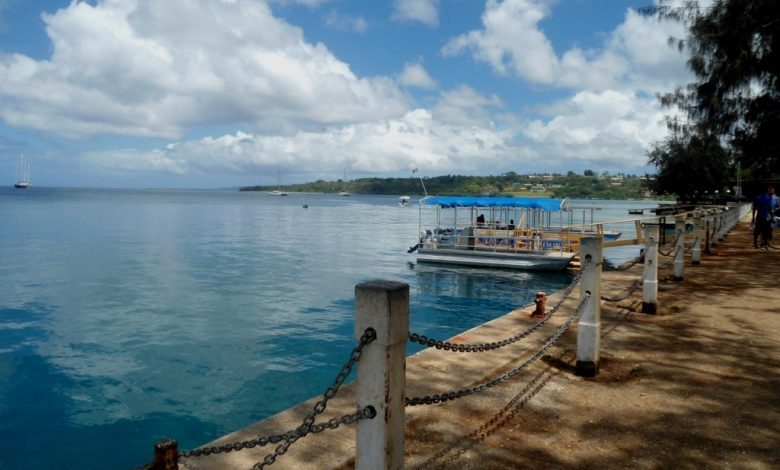
Avoid assuming every pre-earthquake waterfront route, business entrance or meeting point is still usable. Do not place a non-refundable water activity before an international departure, and do not treat an old photograph as evidence of present coastal access.
Your next step: send the accommodation your arrival details and one proposed coastal day. Ask it to confirm the current entrance, airport pickup and permitted route, then book an operator whose cancellation and weather policy is clear.
Continue planning
Compare alternative Pacific city stays in our Suva guide and Apia guide, then choose a wider region through the Oceania planning hub. Each country needs its own flight and entry checks.
Photo credit: Jean Van Jean, Port Vila waterfront (2012), CC BY 3.0, via Wikimedia Commons. Historical photograph retained without alteration.