How to Choose Your First Antarctica Expedition Cruise
An Antarctica expedition cruise can look simple in a brochure: icebergs, penguins and a ship sailing through extraordinary scenery. Choosing the right trip takes more care. Two departures with similar names may offer very different amounts of time exploring, different landing arrangements and different costs once flights and extras are included.
Start with the experience you want. Is stepping ashore essential? Would you enjoy sea days, or prefer to fly over part of the route? This guide explains the questions to ask before choosing your first Antarctic Peninsula expedition.
1. Decide Whether You Want to Go Ashore
Check whether the voyage is an expedition with planned landings or a scenic cruise that stays offshore. IAATO explains that vessels carrying more than 500 passengers cannot land passengers in Antarctic waters. Its vessel categories distinguish smaller expedition ships from larger cruise-only vessels. Read IAATO’s ship-size guidance.
For landing operations, the Antarctic visitor guidelines limit the number ashore from a vessel to 100 passengers at a time, with lower limits at some sites. That makes the landing rotation worth discussing before you book. See the official visitor guidelines.
Ask how many passengers your departure will carry, how groups rotate and what happens while another group is ashore. A smaller passenger count may suit your priorities, but it does not guarantee a particular landing, wildlife encounter or amount of time outside.
2. Compare Sailing and Fly-Cruise Options
A useful first comparison is how you reach the expedition area. Ushuaia in Argentina is one of the departure ports for Antarctic cruises; IAATO lists several South American gateways. Check IAATO’s departure information.
| Option | What to compare | Question to ask |
|---|---|---|
| Sail across the Drake Passage | Sea days, onboard facilities and the balance between travel and exploration | How many days are planned in the Antarctic Peninsula region? |
| Fly-cruise | Flight arrangements, baggage limits and weather contingency terms | What happens if the Antarctic flight is delayed or cancelled? |
| Sail one way and fly the other | Different start and finish points, connecting flights and hotel nights | Which transfers and accommodation are included at each end? |
For example, Antarctica21 operates flights between Punta Arenas and King George Island, where guests join their expedition vessel. Its published guidance explains that weather can change flight timing and that contingency arrangements apply. These terms belong to that operator; request the current conditions for the specific voyage you are considering. Read Antarctica21’s flight and contingency information.
Our planning suggestion is to leave breathing room around the expedition. Ask the operator when you must arrive and when it recommends booking your onward flight before purchasing separate tickets.
3. Count Exploration Days, Not Just Trip Length
A headline such as “10 days” does not tell you how the time is divided. Mark each day as a hotel night, transfer, sea passage or planned expedition day. This makes quotations easier to compare.
The Australian Antarctic Program identifies mid-November to early March as the period with the best conditions for visiting the Antarctic Peninsula. The exact departure date should also fit your available time and the itinerary offered. Read the Australian Antarctic Program’s tourism FAQ.
Ask which activities are planned, which are optional and which require advance reservations. Treat named landing sites as intended stops, rather than appointments: the expedition team must work with the conditions it encounters.
4. Compare the Complete Cost
Build a total-trip budget using written inclusions. Instead of comparing only the advertised cabin fare, put the following items beside each quotation:
- Getting there: international and domestic flights, transfers and required hotel nights.
- Your cabin: occupancy, bed arrangement, private bathroom and any solo supplement.
- Daily expenses: meals, drinks, gratuities, laundry and internet.
- Activities: guided landings, boat excursions and optional experiences such as kayaking.
- Equipment: whether boots and a parka are provided, loaned or purchased separately.
- Changes: cancellation terms and costs arising from disrupted connections.
Our recommendation is to compare the same cabin occupancy and the same essential activities across offers. A lower starting fare may still be suitable, but you need the full inclusion list to judge it.
5. Check Whether the Daily Routine Suits You
Before paying a deposit, ask about boarding small boats, steps, walking surfaces and assistance available during excursions. Describe any mobility needs to the operator and request a clear explanation of the activities you could participate in.
Also ask about medical documentation, onboard medical facilities and the insurance requirements for your voyage. IAATO advises checking medical and travel insurance for the whole journey. Confirm the required cover directly with the operator and insurer. See IAATO’s travel preparation FAQ.
6. Prepare for Responsible Wildlife Viewing
Wildlife should set the pace of an encounter. Give animals room, keep their routes clear and follow the expedition team’s instructions. Do not feed or touch birds or seals, and avoid behavior that disturbs them. Read IAATO’s guidance for visitors.
Clean your boots, clothing and equipment before travel, paying attention to places that trap dirt or seeds. The visitor guidelines explain why this matters for preventing the introduction of non-native species and pathogens. Check the equipment-cleaning guidance.
Read the operator’s latest biosecurity instructions close to departure. IAATO’s preparation page includes season-specific protocols and wildlife resources. Prepare for your expedition with IAATO.
Your Shortlist Before Booking
Choose two or three departures and ask each operator for the passenger count, planned exploration days, full inclusions, activity requirements and disruption policy. Our recommendation for a first visit is to give those answers more weight than a long list of promised sights.
For an introduction to the continent, its landscapes and travel essentials, continue with our Antarctica travel guide. You can also browse all our Antarctica articles.
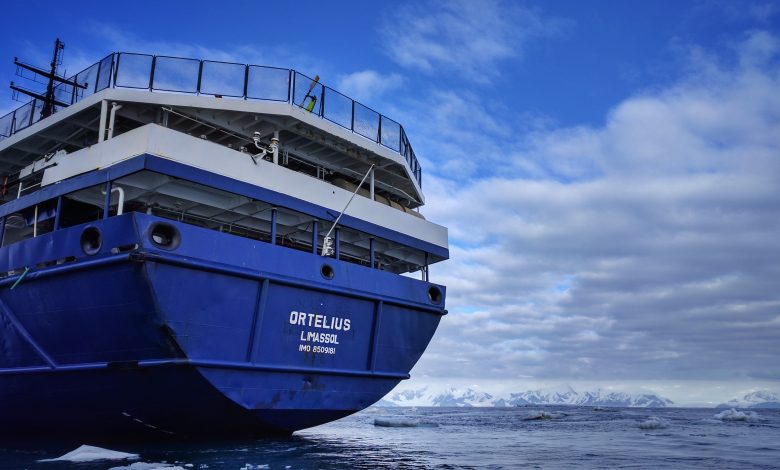
Featured photograph: MV Ortelius anchored in Robertson Bay near Cape Adare, Antarctica (2017), by owamux. Licensed under CC BY 2.0. Resized for display; archive thumbnails may be cropped. This Ross Sea region photograph illustrates expedition cruising; it is not an Antarctic Peninsula landing site.