Botswana rewards travellers who choose a clear safari objective before booking. The Okavango Delta, Chobe National Park and the Makgadikgadi area are not interchangeable: water, habitats, access and camp styles differ. This updated guide helps you decide where to spend limited nights, how to move between gateways and what to confirm with an operator.
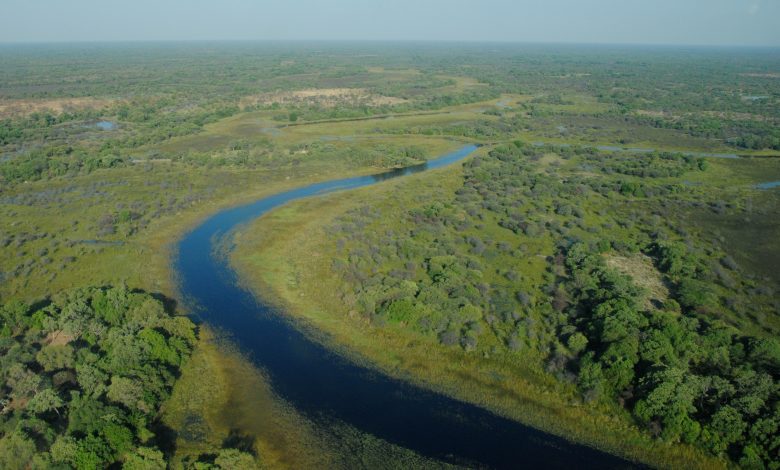
Featured image: Okavango Delta channels from the air. Photo: diego_cue, CC BY-SA 3.0, via Wikimedia Commons.
Choose the right region
- Okavango Delta: Choose it for mokoro excursions, water channels and a wilderness camp reached from Maun or by light aircraft. The delta is a UNESCO World Heritage property; read the UNESCO site profile alongside operator information.
- Chobe National Park: Kasane is the practical gateway, with river-based and land safaris. It also connects naturally with our Victoria Falls guide, but allow border and transfer buffer if you cross countries.
- Makgadikgadi and Nxai Pans: Select these for open salt-pan landscapes and a different dry-country experience. Check road access and seasonal camp operations rather than assuming every lodge runs year-round.
- Central Kalahari: This is a remote choice for travellers who want solitude and desert-adapted wildlife, not a quick add-on to a northern itinerary.
The Botswana Tourism Organisation lists parks, reserves, accommodation and travel-information pages. Use it to build a shortlist, then confirm details directly with the camp or licensed operator.
A sensible first safari plan
For seven nights, combine two areas rather than rushing through four. A common structure is two nights in Maun or the Delta gateway, three nights inside the Okavango region and two nights around Kasane/Chobe. If the Delta is your main reason for travelling, give it at least three nights. If you are adding Victoria Falls, keep Chobe to two or three nights and protect the final transfer day.
For a shorter trip, choose one hub: Maun for a Delta-focused stay or Kasane for Chobe plus a possible Falls day. Every extra flight, border crossing or long road transfer removes time from the safari itself.
When to travel
Botswana’s wildlife and water experience changes through the year. The Delta’s flood pulse does not arrive at the same time as local rainfall, and individual camps describe access differently. Ask what “water season” means for your exact concession: will mokoro routes be operating, are game drives possible after rain, and which airstrip or road is used? Compare shoulder-season offers only after checking the activities included, not just the headline nightly rate.
Transport and camp logistics
Maun and Kasane are useful gateways, but remote camps may require a small aircraft transfer or a long 4×4 journey. Confirm baggage weight and soft-bag rules, check whether transfers are shared, and ask who meets you at each airstrip. Keep medication, documents and one change of clothes in your hand luggage. Build a weather buffer before an international flight; a missed connection in a remote area is difficult to solve at the last minute.
Accommodation ranges from guesthouses and campsites to tented camps and lodges. Ask what the rate includes: meals, park or concession fees, scheduled activities, transfers and drinks can be separate. Request the cancellation terms, child policy, single supplement and any mobility limits in writing. Do not assume Wi-Fi, charging or card payments are available in every camp.
Wildlife and community etiquette
Listen to your guide, keep voices low and never pressure a driver to approach an animal. Follow camp rules around walking, food storage and night movement. Choose community-based visits through operators that explain how hosts are paid and what photography consent means. Botswana Tourism Organisation highlights community projects and eco-tourism certification; use those pages when comparing suppliers.
Booking checklist
- Confirm passport, entry and health requirements from current official sources for your nationality.
- Choose the region and number of nights before comparing camps.
- Verify permits, concession fees, transfers and baggage rules in the written quote.
- Buy insurance that covers evacuation and itinerary disruption.
- Save emergency contacts, airstrip instructions and your operator’s 24-hour number offline.
Botswana works best when you trade checklist tourism for a few well-chosen nights. For another wildlife-planning comparison, see our new Rwanda five-day itinerary and browse the wider Africa collection.
3 Comments